
GreenValue Presents Cold Chain Energy Strategies at Chamber Training Program
In response to the growing demand for energy transition in cold chain logistics and warehousing, the National General Chamber of Commerce, R.O.C. hosted the “Energy-Saving Equipment for Cold Storage Training Program” on July 22 and 28, 2025, in Taipei and Kaohsiung, respectively.
Mr. Yofong Hsu, General Manager of GreenValue Co., Ltd. and former Chairman of the Taipei Refrigeration and Air Conditioning Engineers Association, was invited to deliver a keynote presentation. Drawing on GreenValue’s extensive project experience, he shared forward-looking case studies and energy-saving strategies in cold storage planning and system integration. The audience included professionals from retail chains, logistics service providers, cold storage facilities, and engineering consultancies.
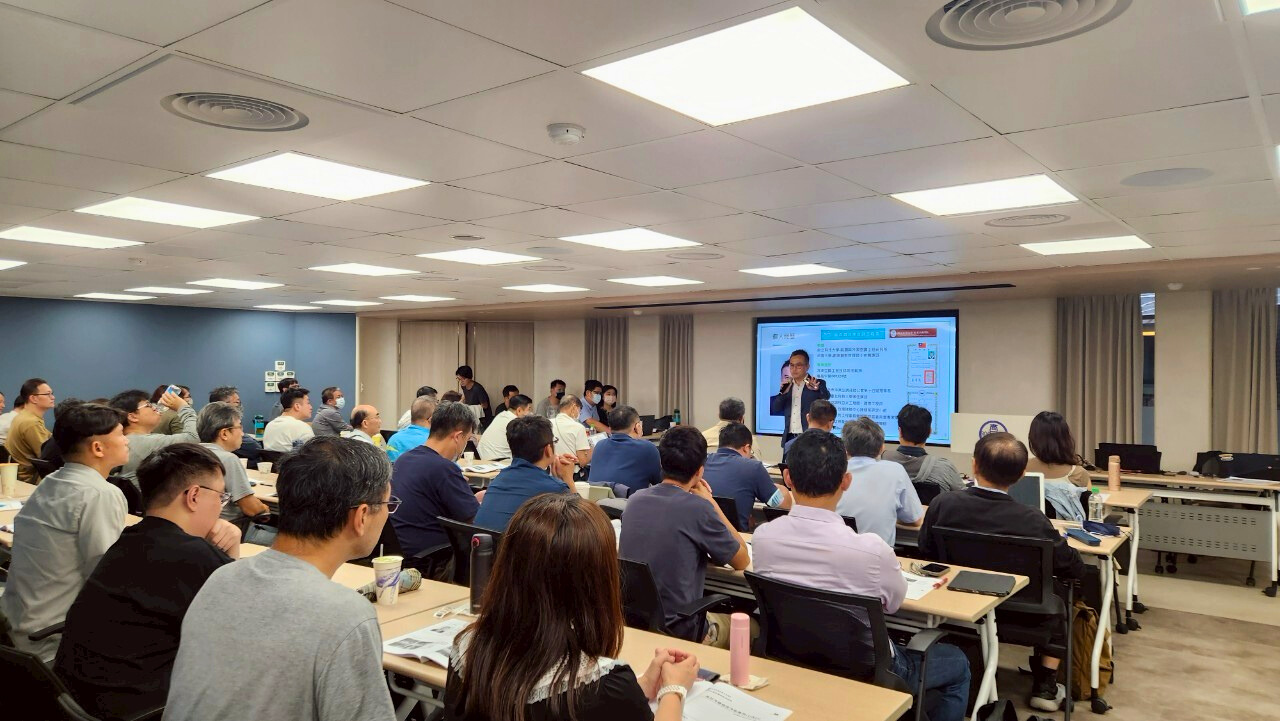
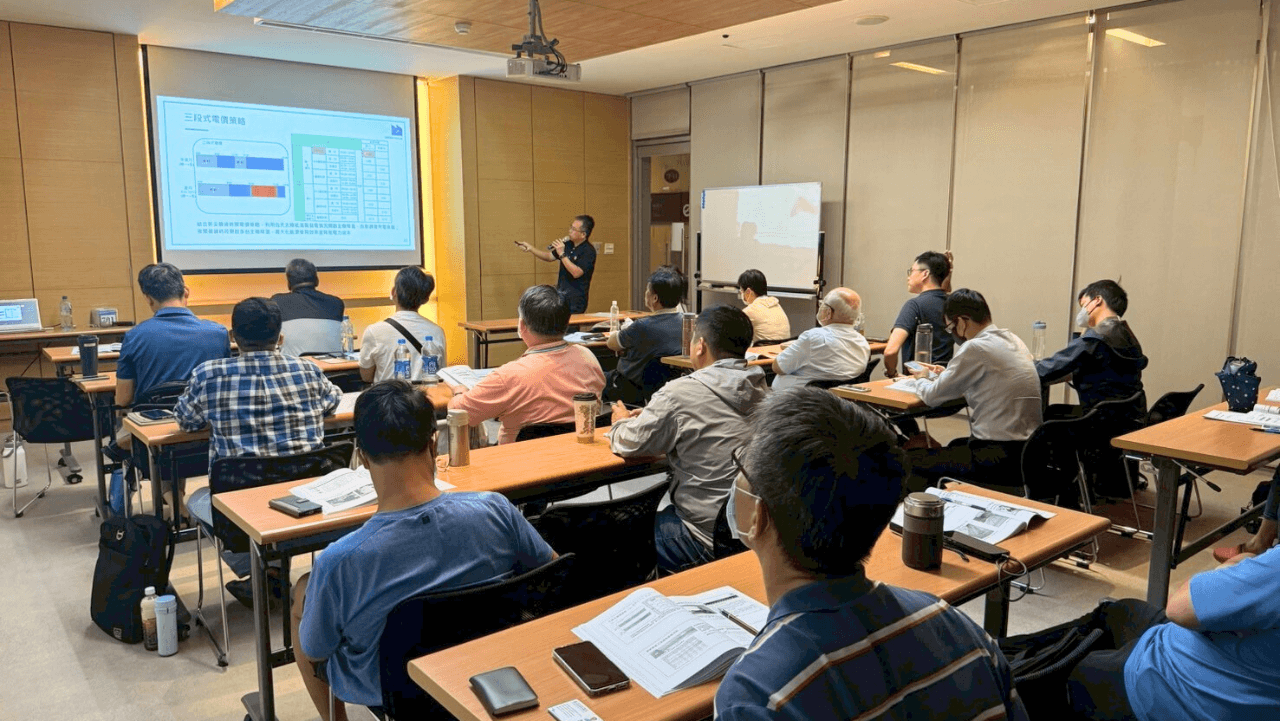
▲Industry professionals from cold storage, logistics, and retail gathered to explore energy-saving and smart management solutions.
From Design to Operations: Integrating Efficiency with Smart Controls
Energy-efficient cold storage requires more than just equipment—it demands a system-level approach that integrates building design, equipment layout, and operational logic. It’s not merely about achieving target temperatures, but about striking the right balance between energy performance and environmental stability.
In one multi-temperature logistics center in Taoyuan, GreenValue implemented a system that redirected waste heat generated during defrosting to support dehumidification and office cooling, maximizing the reuse of thermal energy and boosting overall system efficiency.
When it comes to equipment upgrades, the key often lies in material selection and construction methods. For example, high fire-rated PIR insulation panels significantly extend thermal retention compared to conventional materials, making them well-suited for both new builds and retrofits. Additionally, optimizing cooling tower performance and return air configurations can significantly impact energy use—yet these elements are often overlooked in early-stage planning.
Real Energy Savings Start with Systems Thinking
Challenges in cold storage facilities often aren’t due to outdated equipment alone, but rather the lack of an integrated system capable of detecting anomalies in real time and adjusting operations dynamically. GreenValue’s SCADA-based central monitoring system addresses this gap by combining IoT sensors, cloud integration, and AI-powered image recognition to enable predictive maintenance and performance optimization.
Not all projects begin from scratch. In fact, retrofitting aging cold storage facilities often presents greater complexity—requiring careful planning around limited space, operational continuity, and upgrades to insulation and fire safety standards. These types of projects call for replicable solutions backed by real-world experience.
According to the 2023 Energy Audit Report for Non-Industrial Sectors from Taiwan’s Bureau of Energy, the average EUI (Energy Use Intensity) for warehouse operations was 232.4 kWh/m² per year. At a GreenValue-managed logistics center in Taoyuan, spanning over 60,000 square meters, integrated design improvements brought the EUI down to 107 kWh/m² per year, representing a 25%+ improvement in energy efficiency.
The key strategies included|
- AI-powered defrosting management that accurately detects frost buildup and reduces unnecessary energy use.
- Waste heat recovery to support HVAC loads in office and dehumidified zones.
- Solar power integration and TOU (time-of-use) pricing strategies to optimize chiller operation and minimize peak demand charges.
Smart Cold Chain for a Sustainable Future
At GreenValue, we believe that technology is a pathway to sustainability. Through smart sensing, AI integration, and system-level energy management, we continue to support Taiwan’s cold chain industry in its transition toward more intelligent, efficient, and resilient infrastructure.
Events like this training program foster valuable dialogue across sectors—and we look forward to ongoing collaboration in building cold chain facilities that deliver on performance, safety, and sustainability.
